
Mathematics at Cawston Grange Primary School
Our Champion of Maths – Number Ninja Nisha

Mathematics is a creative and highly interconnected subject that underpins everyday life and supports learning across science, technology and engineering. At Cawston Grange Primary School, we aim to develop confident mathematicians who enjoy learning, think logically and apply their skills with accuracy and reasoning. Our mathematics curriculum is designed to ensure all pupils develop a secure understanding of key concepts, a positive attitude to maths, and the ability to solve problems with confidence.
Our Vision for Mathematics
Our vision is for every child to succeed in mathematics. We believe that:
- Everyone can learn maths to a high standard
- Mistakes are an important part of learning
- Reasoning and questioning deepen understanding
We want children to leave Cawston Grange as resilient, fluent mathematicians who are well prepared for the next stage of their education and for life beyond school.
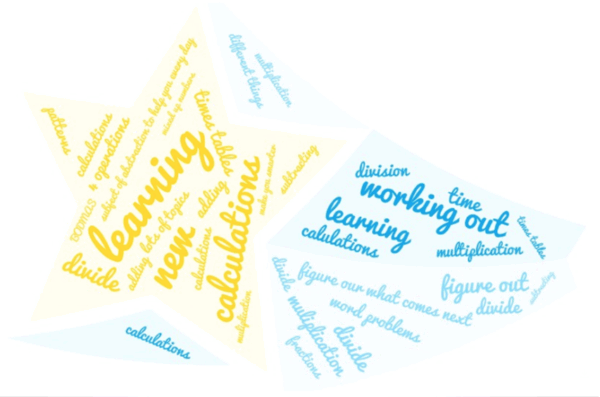
Asking our children about Maths is really important to making sure we are getting it right….and from our pupil voice, the children have lots of great ideas about what Maths is!
What do you think Maths is?
Our Mathematics Curriculum
We follow a mastery approach to mathematics using White Rose Maths, which ensures learning is carefully sequenced and builds progressively over time.
Our curriculum aims to:
- Develop deep understanding through small, manageable steps
- Strengthen fluency, reasoning and problem solving
- Ensure all pupils access the full curriculum
- Build long-term retention of key mathematical knowledge
How Mathematics Is Taught
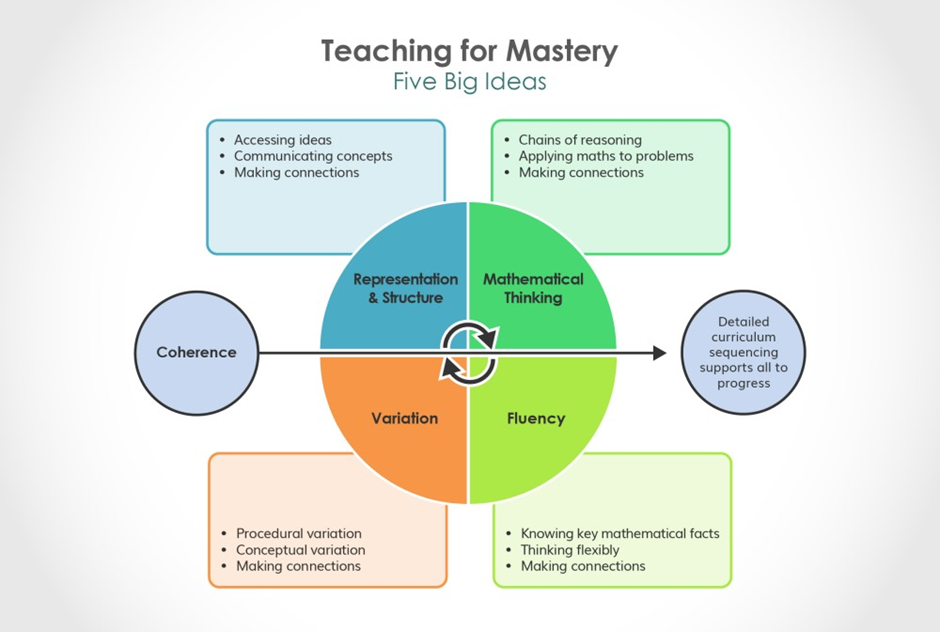
Teaching for Mastery
Lessons are structured around a Concrete–Pictorial–Abstract (CPA) approach:
- Concrete – using practical resources and manipulatives
- Pictorial – using drawings, diagrams and visual models
- Abstract – working confidently with numbers and symbols
This progression supports pupils to understand concepts securely before moving on.
Fluency, Reasoning and Problem Solving
Pupils regularly practise:
- Accurate and efficient calculation
- Explaining their thinking using mathematical language
- Solving problems and making connections between concepts
Teachers use well-planned questioning to deepen understanding and challenge all learners.
Curriculum Progression and Sequencing
Our mathematics curriculum is carefully sequenced so that new learning builds on prior knowledge. Key concepts are introduced early, revisited often and developed in increasing depth as pupils move through the school.
- EYFS focuses on early number, counting and composition
- Key Stage 1 develops fluency and secure number knowledge
- Key Stage 2 builds reasoning, problem solving and application
This approach supports pupils to remember more over time and apply learning confidently.
Developing Strong Number Sense
A strong understanding of number is central to our curriculum. We place a clear emphasis on number, place value and calculation across all year groups.
In EYFS and Key Stage 1, we follow the Mastering Number Programme, which supports children through short, frequent sessions focused on:
- Number composition
- Secure number facts
- Confidence and fluency
This strong foundation prepares pupils for future mathematical learning.
Inclusion and Support for All Pupils
All children learn mathematics together in mixed-ability classes, following the same curriculum content and pace.
Support is provided through:
- Concrete resources and visual models
- Scaffolding and pre-teaching where needed
- Targeted adult support
Challenge is built in through ‘going deeper’ questions that encourage pupils to reason, explain and make connections.
High expectations are maintained for all pupils, including those with SEND and those who are disadvantaged.
Securing Learning and Assessment
Teachers use ongoing assessment to:
- Identify misconceptions quickly
- Adapt teaching to meet pupils’ needs
- Plan appropriate next steps
Lessons include opportunities for retrieval and consolidation, helping pupils to strengthen recall and secure long-term learning.
Subject leaders monitor mathematics through work scrutiny, lesson visits and pupil voice to ensure consistency, progression and high standards.
Impact
Through our approach, pupils:
- Develop secure mathematical understanding
- Are fluent, confident and accurate
- Can explain their thinking clearly
- Enjoy maths and approach challenges positively
Pupils leave each year group well prepared for the next stage of learning.
Enrichment Opportunities
We enhance maths learning through a range of enrichment activities, including:
- Annual Number Day
- Times Tables Rock Stars competitions and England Rocks Week
- Year 5 maths competition at Princethorpe College (2023 winners)
- First Maths Challenge (Years 3 and 4)
- Primary Maths Challenge (Years 5 and 6)
- After-school maths and games clubs
- PTA Family Bingo Night
Supporting Parents and Carers
We recognise that maths teaching methods may feel different from those parents remember. To support learning at home, we recommend White Rose Maths: Maths with Michael, a short video series designed to explain modern methods clearly.
